
The question sounds simple. The answer is more nuanced than most people expect. Sleep needs vary by age, genetics, health status, and lifestyle, and the number that makes headlines is not always the number that applies to you.
Here is what the evidence actually says, and how to think about your own sleep requirements.
-

Zopiclone 7.5 mg (Blue)
Insomnia Price range: £105.00 through £675.00 ADD TO CART This product has multiple variants. The options may be chosen on the product page -

Zopiclone 7.5 mg (Zopisign)
Insomnia Price range: £105.00 through £675.00 ADD TO CART This product has multiple variants. The options may be chosen on the product page -

Zopiclone 10 mg (Zopisign)
Insomnia Price range: £110.00 through £685.00 ADD TO CART This product has multiple variants. The options may be chosen on the product page -

Zopiclone 7.5 mg (White Pills)
Insomnia Price range: £105.00 through £675.00 ADD TO CART This product has multiple variants. The options may be chosen on the product page
The Recommended Range for Adults
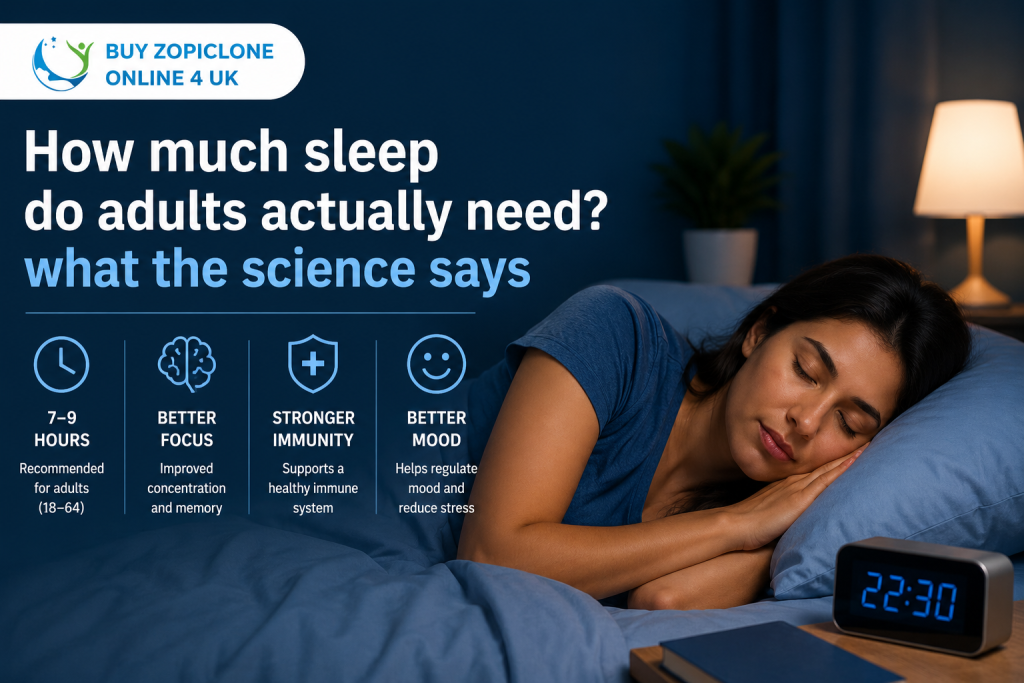
The most widely cited guidance comes from the National Sleep Foundation and is broadly aligned with NHS recommendations. Adults aged 18 to 64 need seven to nine hours of sleep per night. Adults aged 65 and over typically need seven to eight hours, though sleep architecture changes with age mean that this often becomes more difficult to achieve in a single block.
Those figures are ranges, not targets. A person who consistently feels alert, focused, and functional on seven hours is not sleep deprived. A person who needs nine hours to feel the same way is not lazy.
What Happens When You Get Too Little Sleep?
Sleep is not passive recovery time. During sleep, the brain consolidates memories, clears metabolic waste products, regulates hormones, and carries out cellular repair. When sleep is chronically cut short, these processes are compromised. Persistent insomnia can further affect the body’s ability to recover and function properly.
Consistent sleep of fewer than six hours per night is associated with impaired concentration, decision making, and reaction time, increased risk of anxiety and depression, weakened immune function, higher long term risk of type 2 diabetes, cardiovascular disease and obesity, reduced emotional regulation, and increased irritability.
Short term sleep loss, such as a bad night or two, has relatively minor and reversible effects. Chronic restriction is where the health consequences accumulate.
What Happens When You Sleep Too Much?
Consistently sleeping more than nine hours is associated with some of the same health risks as too little sleep, including higher rates of cardiovascular disease and depression. However, the relationship is complicated. In most cases, long sleep duration is a symptom of an underlying problem, such as depression, chronic illness, sleep apnoea, or significant sleep debt, rather than a cause of poor health.
If you find yourself needing ten or more hours regularly and still feeling unrefreshed, it is worth discussing with your GP.
Sleep Quality Matters as Much as Quantity
Eight hours in bed is not the same as eight hours of restorative sleep. Sleep consists of multiple cycles, each roughly 90 minutes long, moving through light sleep, deep sleep, and REM (rapid eye movement) sleep. Deep sleep is where physical restoration primarily happens. REM sleep is where emotional processing and memory consolidation occur.
Disrupted sleep, including waking frequently, lying awake for extended periods, or having sleep fragmented by noise or light, reduces the time spent in deep and REM stages even when total time in bed appears adequate. This is why people sometimes report feeling unrefreshed despite what appears to be a full night’s sleep.
Individual Variation Is Real
A small minority of people genuinely function well on six hours or less. A similarly small minority require nine or more. These differences appear to have a genetic basis and are not simply a matter of habit or preference.
The most reliable measure of whether you are getting enough sleep is not a number; it is how you feel and function during the day. If you are regularly falling asleep within minutes of sitting still, struggling to stay awake in the afternoon, or relying on caffeine to function, you are probably not getting enough sleep regardless of how many hours you log.
Practical Guidance
Aim for seven to nine hours if you are between 18 and 64.
Prioritise consistency by going to bed and waking at the same time every day, including weekends, to support your circadian rhythm.
Do not use weekends to catch up on large amounts of lost sleep. While some recovery is possible, it does not fully reverse the effects of weekday restriction.
If you regularly feel tired despite adequate hours, consider sleep quality rather than quantity as the problem to address.
Frequently Asked Questions
Can You Train Yourself to Need Less Sleep?
There is little reliable evidence that healthy adults can meaningfully reduce their sleep need through habit or practice. Studies on self reported short sleepers suggest most are either underestimating their actual sleep time or accumulating cognitive deficits they have become accustomed to.
Is It Bad to Sleep In on Weekends?
Occasional extra sleep on weekends is unlikely to cause harm, but large swings in sleep timing across the week, sometimes called social jetlag, can disrupt your circadian rhythm and make weekday mornings harder.
Do Older Adults Need Less Sleep?
The recommended range is slightly narrower at seven to eight hours, but the need does not dramatically decrease. What changes is the ability to achieve consolidated sleep. Many older adults sleep lighter and wake more frequently, which is a biological shift rather than a sign they need less rest.
Does Napping Count Toward Total Sleep?
Short naps of 20 to 30 minutes can reduce daytime sleepiness without significantly affecting night time sleep in most people. Long or late naps can make it harder to fall asleep at night and are generally not recommended for people with insomnia.
Conclusion
Most adults need seven to nine hours of sleep per night, but individual needs vary. The most important measure is not a specific number but how rested, alert, and functional you feel during the day. Consistent, high quality sleep remains one of the strongest foundations for long term physical and mental health.