
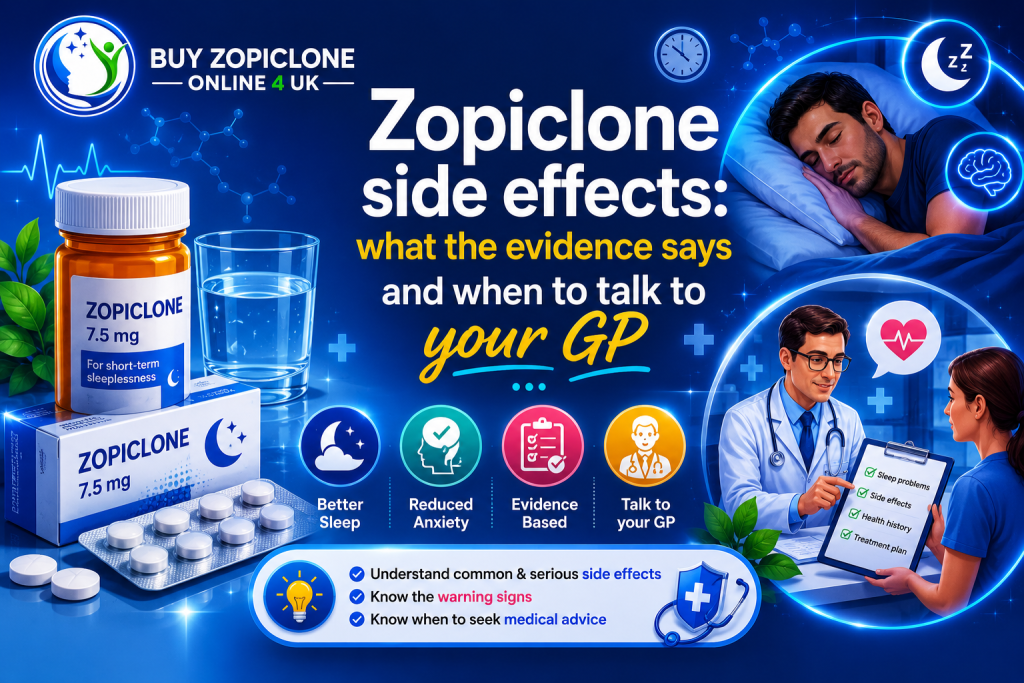
Zopiclone is an effective short-term sleep aid for many people, but like all prescription medicines, it carries a range of side effects. If you’re unfamiliar with the medicine itself, it’s helpful to first understand what zopiclone is and how it works before exploring its safety profile.
This article covers the side effects documented in clinical evidence and reflected in NHS prescribing guidance. It is not a substitute for reading the patient information leaflet that comes with the medication, or for speaking with your GP or pharmacist.
The most common side effect: a bitter or metallic taste
The most frequently reported side effect of zopiclone is a persistent bitter or metallic taste in the mouth, sometimes described as a taste of copper or chemicals. It can be present on waking and may persist through parts of the following day. Studies suggest this affects a majority of people who take zopiclone.
It is not dangerous, but it is often the reason people find the medication unpleasant and choose to discuss zopiclone vs other sleep medications with their GP if symptoms become bothersome.
Next-day drowsiness and impaired functioning
Zopiclone has a half-life of approximately five hours, meaning half of the active compound is still present in the body five hours after taking it. For many people, this produces residual sedation the following morning – sometimes called a hangover effect.
This has important practical implications. People who experience next-day drowsiness should not drive or operate heavy machinery until they are certain the effects have fully worn off. The DVLA and NHS are explicit on this point: driving while impaired by prescribed medication is both dangerous and illegal.
The extent of next-day drowsiness varies between individuals and tends to be more pronounced in older adults.
Other commonly reported side effects
- Dizziness or light-headedness, particularly on standing up quickly
- Dry mouth
- Headache
- Nausea
- Feeling unusually tired or lethargic the following day
- Difficulty concentrating or memory problems
Most of these side effects are mild and reduce as the body adjusts to the medication or after the treatment course ends. If any of them are significantly affecting your daily life, it is worth speaking to your GP or pharmacist about them.
Less common but more serious side effects
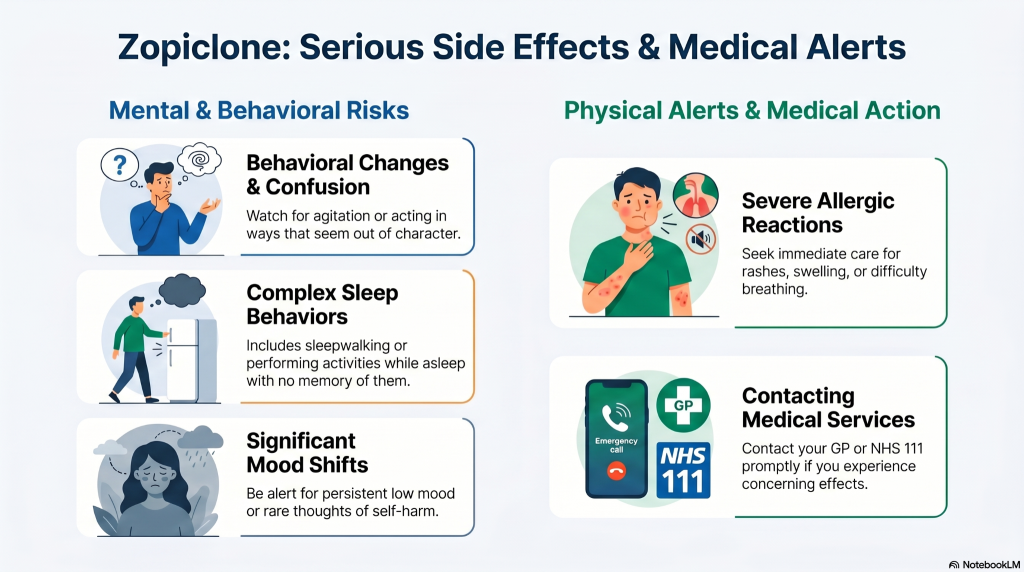
Less frequently, zopiclone can cause more significant side effects that require medical attention:
- Unusual changes in behaviour – including confusion, agitation, or acting in ways that seem out of character
- Memory problems or sleepwalking – rare cases of people engaging in complex behaviours while asleep and having no memory of them have been reported
- Mood changes, including low mood or, rarely, thoughts of self-harm – if this occurs, contact your GP promptly
- Allergic reactions – symptoms include rash, swelling, or difficulty breathing and require immediate medical attention
These effects are uncommon but documented. If you experience anything that concerns you after taking zopiclone, contact your GP or NHS 111.
Dependence and withdrawal
Dependence is one of the most clinically significant risks associated with zopiclone. Physical and psychological dependence can develop with regular use, sometimes within just a few weeks – which is why prescribing guidelines recommend courses of two to four weeks at most.
Signs that dependence may be developing include:
- Feeling that the medication is less effective than it was and wanting a higher dose
- Anxiety or sleep worsening when a dose is missed or delayed
- Difficulty imagining sleeping without the medication
- Continuing to take the medication beyond the prescribed course
Stopping zopiclone abruptly after prolonged use can cause withdrawal symptoms, including rebound insomnia (which is often worse than the original sleep problem), anxiety, irritability, and in some cases more severe effects. If you have been taking zopiclone for longer than prescribed and want to stop, speak to your GP – a gradual reduction plan is safer than stopping suddenly.
Zopiclone and alcohol
Buy Zopicon 7.5mg Tablet with alcohol significantly increases the risk of side effects, particularly sedation, respiratory depression, and impaired judgement. The NHS advises that alcohol should not be consumed while taking zopiclone. This is not a guideline that can be safely ignored.
Zopiclone and older adults
Older adults are more sensitive to the effects of zopiclone and at higher risk of several specific problems:
- Falls – sedation and dizziness increase fall risk, which is a significant health concern in older adults
- Cognitive effects – memory problems and confusion are more pronounced
- Prolonged effects – the medication clears more slowly from the body with age
For this reason, the lower 3.75mg dose is typically used in older adults, and GPs exercise additional caution in this group.
When to contact your GP
You should contact your GP or seek medical advice if you experience:
- Side effects that are significantly affecting your daily functioning
- Signs that dependence may be developing
- Any unusual behavioural changes
- Symptoms of an allergic reaction
- A desire to continue the medication beyond the prescribed course
- Worsening depression or mood changes
Your GP or pharmacist can advise on whether to continue, adjust the dose, or explore alternative approaches to managing your sleep.
Frequently asked questions
Does the metallic taste go away?
For most people, the taste reduces or disappears when the medication is stopped. It does not typically worsen over time but remains present throughout the course of treatment for most users.
Can I drive the morning after taking zopiclone?
Not until you are certain the sedative effect has fully worn off. If you feel drowsy, have slower reactions, or feel less alert than usual, do not drive. The DVLA guidance is clear that driving while impaired by medication – even prescribed medication – is illegal and dangerous.
Is it safe to take zopiclone every night?
NICE guidelines recommend zopiclone for short-term use only – generally two to four weeks. Regular nightly use beyond this increases the risk of dependence. This is a question to discuss with your prescribing GP, who can review your individual situation.
What happens when you stop taking zopiclone?
After a short prescribed course, most people experience some return of sleep difficulties for a few nights – this is normal and temporary. After prolonged use, rebound insomnia can be more severe. A GP-supervised gradual reduction minimises withdrawal effects.