

Zopiclone is one of the most commonly prescribed sleeping tablets in the UK. If you or someone you know has been prescribed it, or if you have come across it while researching insomnia treatment options, this article explains what it is, how it works in the body, and what the current clinical guidance says about its appropriate use.
This is a purely informational overview. Zopiclone is a prescription-only medicine in the UK. Any decisions about whether it is appropriate for you should be made in conversation with your GP.
What zopiclone is?
-
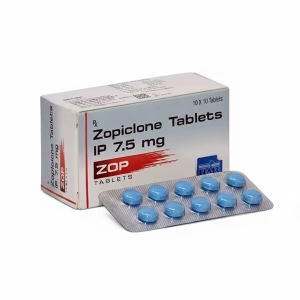
Zopiclone 7.5 mg (Blue)
Price range: £105.00 through £675.00 -

Zopiclone 7.5 mg (White Pills)
Price range: £105.00 through £675.00 -
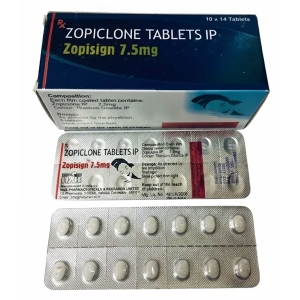
Zopiclone 7.5 mg (Zopisign)
Price range: £105.00 through £675.00
Zopiclone belongs to a class of medicines called non-benzodiazepine hypnotics, also known as Z-drugs – a group that also includes zolpidem and zaleplon. Z- drugs were developed in the 1980s and 1990s as alternatives to benzodiazepines (such as diazepam and temazepam), with the aim of producing similar sleep-promoting effects with a lower risk of dependence and side effects.
In practice, Z- drugs and benzodiazepines work through a similar mechanism and carry many of the same risks, including the potential for dependence with prolonged use. The distinction between them is less significant than early marketing suggested, and current NICE guidelines treat them similarly.
How zopiclone works
Zopiclone works by enhancing the activity of gamma-aminobutyric acid, commonly known as GABA, a neurotransmitter that reduces activity in the central nervous system. It binds to GABA-A receptors in the brain, increasing the inhibitory effect of GABA and producing sedation, reduced anxiety, and muscle relaxation.
The result is that it becomes easier to fall asleep, and sleep is less likely to be disrupted by normal waking. The sedative effect typically begins within an hour of taking the tablet and lasts through the night, though residual drowsiness into the following morning is a recognised side effect for many people.
What NICE guidelines say about zopiclone
The National Institute for Health and Care Excellence (NICE) – which sets clinical guidance for the NHS – has clear guidance on how and when zopiclone should be used. The key points are:
- Zopiclone should only be used for insomnia when the condition is severe, disabling, or causing extreme distress
- It should be prescribed at the lowest effective dose
- It should be used for the shortest possible time – generally two to four weeks maximum
- Cognitive behavioural therapy for insomnia (CBT-I) is recommended as the first-line treatment for chronic insomnia, ahead of any medication
- Patients should be advised of the risk of tolerance and dependence before starting
These guidelines exist because the evidence shows that while zopiclone can provide short-term relief, it does not address the underlying causes of insomnia. When the medication stops, insomnia frequently returns – sometimes worse than before, a phenomenon known as rebound insomnia.
When UK GPs typically prescribe zopiclone
In practice, GPs prescribe zopiclone primarily in situations where insomnia is causing significant functional impairment and other approaches have not been sufficient or are not yet accessible. Common scenarios include:
- Severe acute insomnia following a bereavement, major life event, or acute stress
- Insomnia that is significantly affecting the ability to function at work or manage daily responsibilities
- A short bridging period while waiting for access to CBT-I
- Cases where a patient has already tried sleep hygiene improvements without success and is in significant distress
GPs are generally reluctant to prescribe zopiclone for longer than a few weeks due to the dependence risk, and many follow a policy of not prescribing repeat prescriptions without review.
Who zopiclone is not appropriate for
Zopiclone is not suitable for everyone. GPs will generally not prescribe it for people who:
- Have a history of substance misuse or dependence
- Have severe liver or kidney disease
- Have sleep apnoea or myasthenia gravis
- Are pregnant or breastfeeding
- Have had a previous adverse reaction to zopiclone or similar medicines
Age is also a consideration. Older adults are more sensitive to the sedative effects and at higher risk of falls and cognitive side effects. GPs approach prescribing in this group with additional caution.
The difference between zopiclone 3.75mg and 7.5mg
Zopiclone is available in two strengths in the UK: 3.75mg and 7.5mg. The lower dose is typically used for older adults or those who are more sensitive to the medication. The appropriate strength for any individual is a clinical decision made by the prescribing doctor based on the person’s circumstances, age, health status, and other medications. This article does not provide dosage guidance – that is a conversation to have with your GP.
The relationship between zopiclone and dependence
Dependence on zopiclone is a genuine clinical risk, particularly with use beyond the recommended short period. Physical dependence can develop within a few weeks of regular use, and stopping abruptly after prolonged use can cause withdrawal symptoms including rebound insomnia, anxiety, and in severe cases, more serious effects.
This is not a reason to avoid zopiclone if it has been appropriately prescribed – but it is why the prescribing guidance emphasises short-term use and why GPs will typically plan a gradual reduction rather than an abrupt stop.
Frequently asked questions
Is zopiclone the same as a sleeping pill?
Zopiclone is a type of sleeping pill – specifically a non-benzodiazepine hypnotic. Not all sleeping pills work the same way. Some are antihistamines (such as Nytol), some are melatonin-based, and some, like zopiclone, are prescription-only central nervous system depressants with a different mechanism and risk profile.
Can zopiclone be bought without a prescription in the UK?
No. Zopiclone is a Schedule 4 controlled drug in the UK and is only legally available with a valid prescription from a registered UK prescriber. It cannot legally be purchased online without a prescription.
How quickly does zopiclone work?
The sedative effect typically begins within 30 to 60 minutes of taking the tablet. The exact onset varies between individuals and is affected by factors such as whether it is taken with food.
Is CBT-I better than zopiclone for insomnia?
For chronic insomnia, the evidence consistently shows that CBT-I produces better long-term outcomes than medication. NICE recommends CBT-I as the first-line treatment. Zopiclone may provide faster short-term relief but does not address the underlying causes of insomnia.