

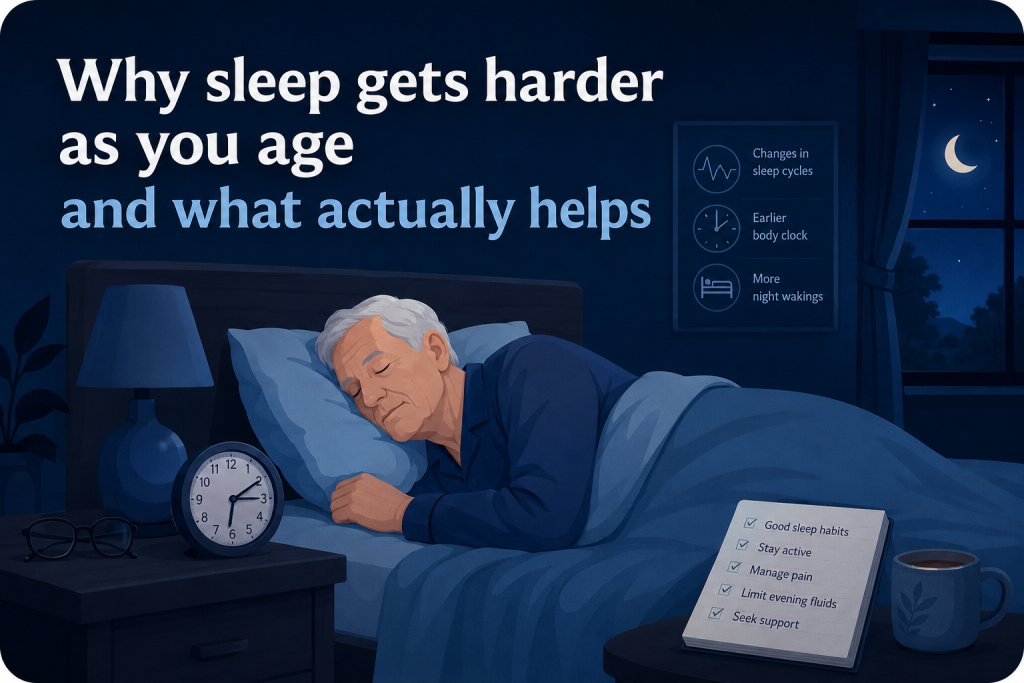
A widespread assumption is that older adults simply need less sleep. The reality is more nuanced. Sleep does change significantly with age – but the changes are largely about architecture and timing rather than need. Understanding what is actually happening can make a considerable difference to how you respond to age-related sleep difficulties.
What changes about sleep as we age
Sleep becomes lighter and more fragmented
Sleep is not a single uniform state. It cycles through stages – light sleep, deep sleep, and REM sleep – in roughly 90-minute cycles throughout the night. Deep sleep, which is the most physically restorative stage, decreases significantly with age. By the time most people reach their 60s, they spend considerably less time in deep sleep than they did in their 30s.
Less deep sleep means lighter overall sleep, which means more frequent waking in response to noise, discomfort, or normal sleep cycle transitions. This is not insomnia in the clinical sense – it is a biological shift. But it can feel very similar, and it can be exacerbated by other factors.
The circadian rhythm shifts earlier
The internal body clock tends to advance with age – a phenomenon called advanced sleep phase. Older adults often feel genuinely sleepy earlier in the evening and wake naturally earlier in the morning. This is a normal biological change, not a sleep disorder.
The problem arises when people resist the earlier sleep pressure – staying up to watch television, for example – and then struggle to sleep when they finally go to bed because the sleep window has partially passed. The solution is usually to align bedtime more closely with what the body clock is signalling, rather than fighting it.
Sleep becomes more sensitive to disruption
Older adults are more easily woken by external stimuli – noise, light, temperature changes, the need to use the bathroom. They also find it harder to return to sleep after waking. This increased sensitivity is partly neurological and partly a consequence of spending less time in deep sleep, where external stimuli are less likely to cause waking.
Common contributors to poor sleep in older adults
Biological changes in sleep architecture explain part of the picture, but several other factors commonly compound sleep difficulties in this age group:
- Chronic pain – arthritis, back pain, and other persistent conditions make finding a comfortable sleep position difficult and increase night waking
- Nocturia – the need to urinate during the night becomes more common with age and is a significant cause of sleep fragmentation
- Medications – many commonly prescribed medicines for older adults, including some for blood pressure, heart conditions, and depression, can interfere with sleep
- Reduced physical activity – lower activity levels reduce the physical tiredness that supports good sleep
- Depression and anxiety – both become more common in later life and are closely associated with sleep disruption
- Bereavement and life transitions – retirement, loss of a partner, and changing social circumstances affect sleep through both psychological and practical channels
- Sleep apnoea – prevalence increases with age and is frequently undiagnosed in older adults
What actually helps
CBT-I adapted for older adults
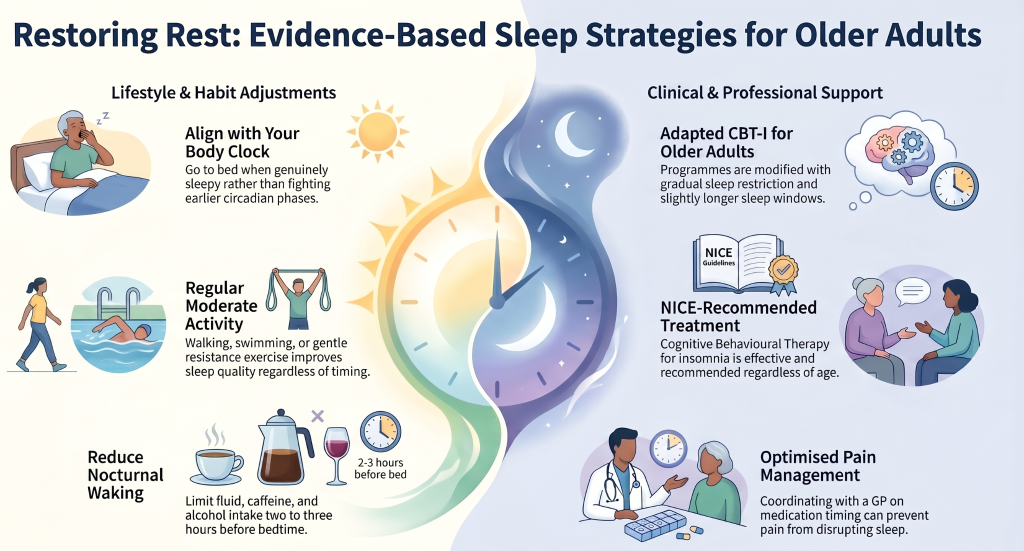
CBT-I is effective for older adults and is recommended by NICE regardless of age. Some adjustments are typically made – sleep restriction is applied more gradually, and the minimum sleep window may be slightly longer. A therapist experienced in working with older adults can adapt the programme appropriately.
Aligning with the body clock
Rather than fighting the earlier circadian phase, working with it tends to be more effective. Going to bed when genuinely sleepy – even if earlier than felt normal in younger years – and waking at a consistent time that reflects natural early waking reduces the mismatch between biological timing and behaviour.
Managing nocturia
Reducing fluid intake in the two to three hours before bed, avoiding caffeine and alcohol in the evening, and discussing bladder control with a GP if the problem is significant can reduce night waking due to the need to urinate.
Addressing pain
Working with a GP to optimise pain management – including timing of pain medication – can improve sleep quality significantly for those where pain is a primary disruptor.
Staying physically active
Regular moderate physical activity is consistently associated with better sleep quality in older adults. Walking, swimming, and gentle resistance exercise all have evidence behind them. Timing matters less for older adults than is sometimes suggested – morning or afternoon exercise both appear beneficial.
What is often unhelpful
Beyond medication, spending excessive time in bed in the hope of accumulating more sleep, napping late in the day, and relying on alcohol to fall asleep are all counterproductive patterns that tend to worsen sleep quality over time.
When to speak to a GP
Age-related changes in sleep are normal, but some situations warrant medical review:
- Loud snoring, gasping during sleep, or waking unrefreshed despite adequate hours – possible sleep apnoea
- Sleep difficulties that have emerged or worsened alongside low mood, loss of interest, or persistent fatigue
- Sleep disruption that is significantly affecting quality of life or daily functioning
- Night-time pain that is not adequately managed
- Concerns about medications affecting sleep
Frequently asked questions
Is it normal to wake several times a night as an older adult?
Yes, to a degree. Lighter sleep architecture and reduced deep sleep mean more frequent waking is a normal biological change. What matters is whether you can return to sleep reasonably easily and whether you feel adequately rested during the day.
Do older adults need less sleep?
Not significantly less. The recommended range narrows slightly to seven to eight hours, but the need for restorative sleep does not decrease dramatically. What changes is the ease of achieving it and its structure, not the underlying requirement.
Is it safe for older adults to take sleeping tablets?
The risks are considerably higher in older adults than in younger people. Falls, cognitive effects, and prolonged sedation are significant concerns. NICE guidelines recommend CBT-I as the preferred treatment at any age. Any decision about medication should involve a GP who is aware of your full health picture and other medications.
Can sleep apnoea develop in later life?
Yes. Prevalence increases with age, and it frequently goes undiagnosed. If you or someone close to you notices loud snoring, breathing pauses during sleep, or you regularly wake feeling unrefreshed, mention this to your GP, who can refer for a sleep study if indicated.